|
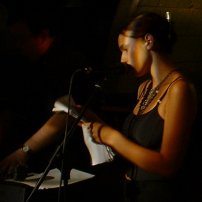
Excerpt from WALK
He reoriginated Gilles’ writings most of which, it seems, he destroyed. The reason for this destruction is as mysterious to me as the content that now hovers thoughtlessly as invisible and inconsequential remnants of ashes about which nothing is known, and which speak of the eternity of the loss in their spectral absence. It seems, if I am allowed to draw on the few scraps of mistreated papers that remain, that Keith – apart from the unexplainable issue which I shall recount as we go along – engaged in practices of literary collage, insertion of scribbles written in a calligraphy that bears a striking – almost morbid – resemblance to Gilles’, and fully fledged scribe-like rewritings of the documents of self-effacement, that mire themselves in paradox as soon as one gathers the organic implosion of texts and selves that makes the self-effacing impulse a condition for extra-personal immortality. The desire for death, at the same time the envy for the tragic glamour of the immortal hero. Yet an immortality that sleeps eternally only to be shaken and woken as something else, as a new, unrepeatable accident in a new, chance-orchestrated frame, as my writing of the written, as my reliving that is also my recreation, my re-origination. Both Keith and Gilles knew this, and both, as simultaneous lovers and haters of this world dreamed to rid themselves of it and rid it of themselves.
Keith rewrote. We are at the mercy. Not that anything is merciful. We are at the mercy of the merciless. We are only because we are at the mercy of the merciless that awaits, ignorant of this advent. Time’s inexorable ramble, the biting indifference of decay. And I? I seek control; I leave nothing to chance because chance has left nothing to me. And nothing remains but chance and me. There is nothing left to say but I have to speak to forget the void, at least for a moment; perhaps I will cease to speak someday – I know I have already done so. I speak to become a node, to steal the flow of whispers and screams, pains and joys that know not their birth outside of the circular horizon that conceals more than it reveals, that reveals only to vaunt the vastness of the concealed. To speak is to mark the world forever with the dishonest subtlety of the saboteur. To speak is to let that subtlety spawn its other within me, to become the envious actor that craves for the limelight as, at the dusk of that momentary release – the interval – he returns at the same seat amongst a nameless audience that watches the world staged; and craves to be a part of it, yet apart from it. I speak to feel alive, and the temporal limit of speech – the sentence – helps me recognise that I’m dying. I shall cease to speak as I have done to taste the utter aloness of the new, to preserve the surge of the thrill that the illusion of newness allows, and while I speak to forget the void, to place myself somewhere, I must see it return as the deathlike metamorphosis of what I have spoken, as my stabbing of a surge that I would have lost anyway. The blankness of my paper does not exist. I write on words and bodies marked by the venomous tongues of the great and the small, the kings and the humble. I write on history much in the same way as history writes on me. I write on myself, on the body which I loved and that inhabits me as I exist it. The paper is deceivingly soft, very much like the skin of tyrants that look from behind innocent, new-born eyes at the world they will eventually mar. It is very much like the world that blemished them, their hardening skin, very much like white noise in the absence of reception, very much like an absence that only points to the presence of a violence we can’t understand, of the impossible metaphysic of a purity I could have had if only two bodies ever had the same fate. To cease to speak is to cease to live, and to cease to live is to cease to die. Not a solution, for solutions are the violent counterpart of murder. To cease to die is to feel; that rare luxury that may be manna or earthquakes, lightning or flowers, heaven or hell... something that suspends the void for a noble while;
Just
like a stupid rhyme, Judging both from the content and the condition of the paper the above must have been a late text. I would opt for the view that it happened a couple of months after the murder, in a time when he was starting to perceive the face of Gilles at the forefront of the annals of his consciousness, to recognise himself more in Shakespeare’s Lavinia than in Hesse’s Steppenwolf. I have killed myself to make the world pay. Everybody must pay. Everybody. The world has cheated me, and my death is my silence and my silence is my death. My death and my silence are the disintegration of the world. For the world must pay. It must pay with its own confusion; it must pay by a silence that unmasks it, by the pangs of a missing return. No I can’t run with my head locked to a future I don’t want to have. I have to look back and turn to salt, and staying there staring at the past twitching at the unquenchable thirst for a better life I could have had. No I will not tarnish the world’s self-assurance with my obedience, neither with my rebellion, nor with my care, nor with my anger. Nor with my arrogance. Nor with my indifference. My silence is my death to the world. My death is the refusal to be in it, to respond to its existence. Thus I become a mirror of its own repellent character. I disappear and in nothingness I find myself in a place where there is only pain and hopelessness. Death is all I desire and now I have it. But the one for whom I exist needs me still. I am in death with him and we make everyone pay by making them disappear along with us. The following is the only piece that is dated. I have studied it closely and figured out I had to take it to an expert. He concluded that the paper was as old as the date claimed it to be. The curious thing was that the handwriting was extremely bold, yet clean, pressed and sunk into the paper as if it had been written six or seven times over. The expert forwarded it to the pros in a laboratory in the United States. Money has never been a real problem with me. I was astonished, baffled by their report. I had exactly the same report from the studies in an other laboratory in Milan three months later. The paper is the original 1971 paper. Scientific tests on the writing (both) purport that the same person rewrote the same words on the existing words, using two different pens, with absolutely the same handwriting (this was the final proof to the one-writer hypothesis) eight times between 1984 and 1991. By the time I was in possession of the writings I already knew the story well enough to be baffled by the only possible yet unspeakable implication. I knew that Keith was never even born in 1971 and that Gilles was dead by 1982. The sinister possibility is the sole possibility unless the ridiculous option that Keith may have got his hands on a blank sheet dated 25th February 1971 (Gilles’ 11th b’day) and signed ‘Gilles Cohen’ and wrote on it is given serious consideration . I believe that he wrote – granted – but in a much more obscure circumstance. I leave it to you dear reader to be baffled and afraid as much as I still am. I killed the puppy. It was ugly stupid, and basterd. Why didn’t they buy a good one in the first place? I did like Abraham. I tied it up and slit its neck open. No angel came to stop me, and then I burnt it. Now I feel bad. My stomach is sick. But I couldn’t let it live. It made me remember my mother. I don’t know why but I hate her. Sometimes I think they are right when they call me a freek. Well, Bye Jesus, I hope you give me something nice for my birthday.
25th
February 1971
Written by: Niki Gravino
|